Your Private, Offline AI Assistant.
Take notes and chat with a smart AI agent directly on your Android device. No cloud, completely private, and 100% free.
download
Private AI vs Cloud AI: Cost, Security, Hybrid Path
Enterprise AI spending hit $37 billion in 2025, and AI deals reach production at nearly twice the rate of traditional SaaS. The question isn't whether enterprises are buying AI — it's where it runs.
TL;DR: Private AI runs on infrastructure your organization controls (on-premise or dedicated private cloud). Cloud AI runs on a third-party vendor's servers behind an API. Private wins on data sovereignty and cost predictability for high-volume, regulated workloads; cloud wins on time-to-value and elasticity. Most enterprises will pick both — Gartner projects 90% will adopt a hybrid model by 2026.
AI-generated image
Private AI vs Cloud AI: The Quick Comparison
Dimension | Private AI | Cloud AI |
|---|---|---|
Where it runs | On-premise or dedicated private cloud | Third-party multi-tenant cloud |
Data sovereignty | Data never leaves your environment | Data processed on vendor infrastructure |
Cost model | High CapEx, fixed OpEx, unlimited usage | Low CapEx, pay-per-token/hour |
Time to value | Hours to weeks to deploy | Minutes (API call) |
Scalability | Limited by owned hardware | Elastic on demand |
Compliance fit | HIPAA, GDPR, EU AI Act, air-gap | Vendor-defined frameworks |
Innovation cadence | Manual model refresh | Latest models on day one |
Best for | Sensitive data, high-volume, regulated | Experimentation, elastic demand |
What Counts as Private AI vs Cloud AI?
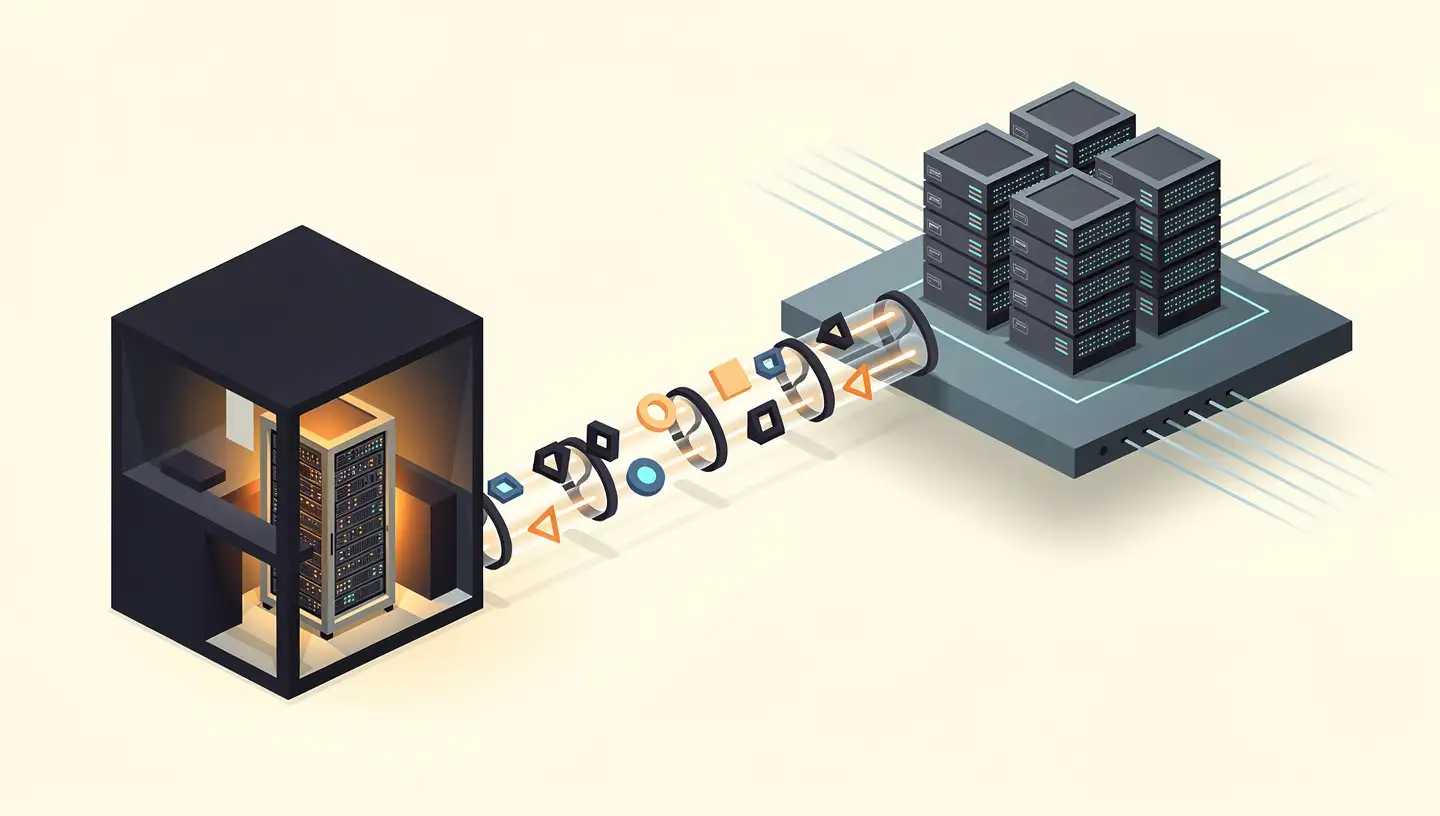
Private AI is AI deployed on infrastructure that is fully controlled and governed by the organization — either on-premise hardware or a dedicated private cloud — so that data never leaves the organization's governance boundary during inference. Some platforms go further with air-gapped deployments where the AI environment has no connection to the public internet at all.
Cloud AI — sometimes called AI-as-a-Service — is the inverse: the organization does not own the model or the infrastructure it runs on, and instead sends data to a third-party vendor via API. Cloud AI uses a multi-tenant model managed by the provider, which delivers scalability and cost-efficiency for dynamic workloads.
The decision-making frame has shifted from "adopt AI or not?" to "public AI or private AI?" — and increasingly to both, strategically placed.
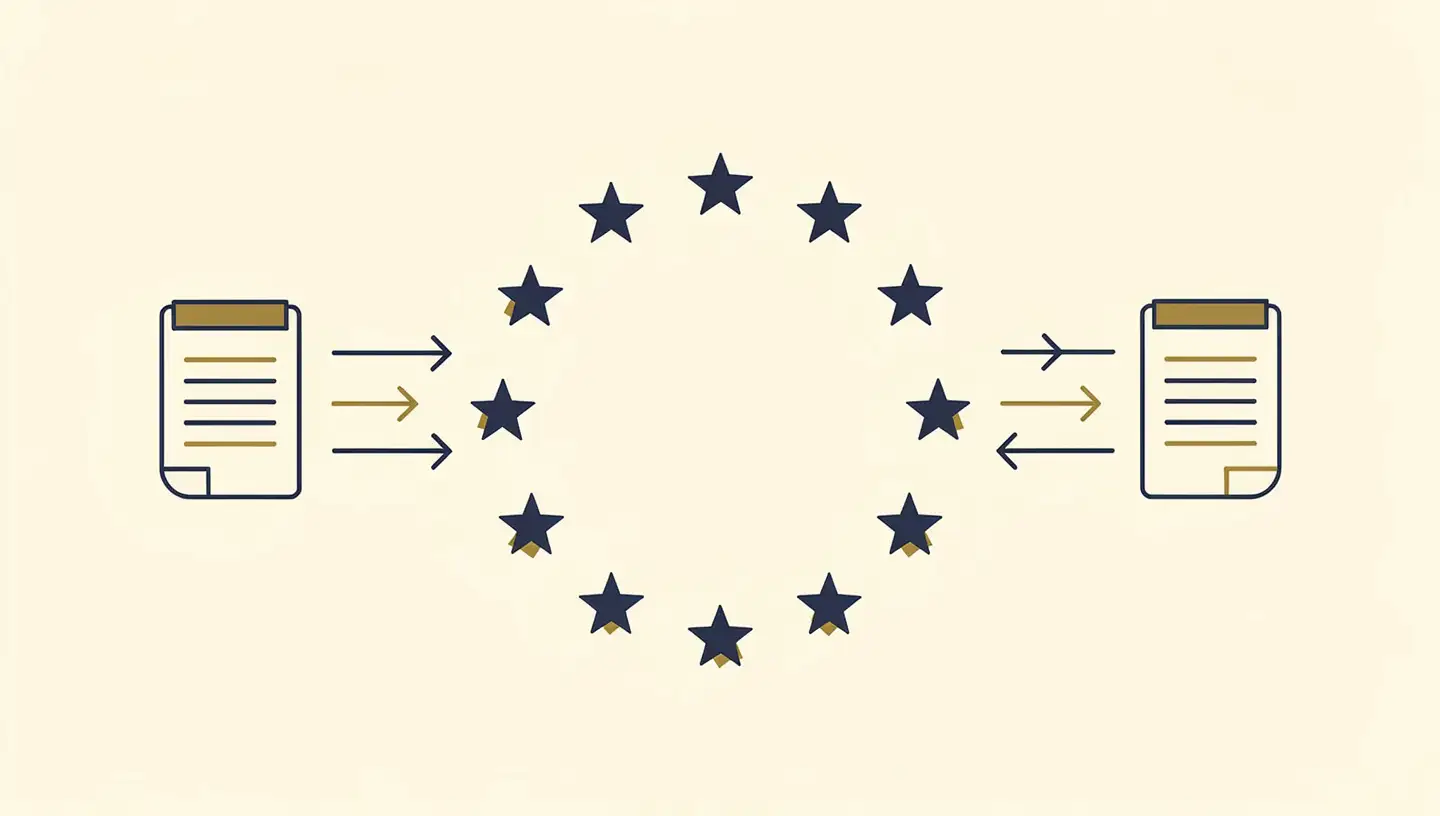
What Data Sovereignty Means Under GDPR and the AI Act
What data sovereignty means under GDPR and the EU AI Act — covering cross-border transfers, adequacy decisions, SCCs, and AI Act obligations for non-EU firms.
Cost: Capital Expenditure vs Operating Expenses
The two models trade entirely different cost shapes.
Private AI: high CapEx, predictable OpEx
A direct purchase of an NVIDIA H100 GPU starts at approximately $25,000 per unit, and a multi-GPU cluster can exceed $400,000 before factoring in power, cooling, networking, and datacenter space. On top of that, private deployments require in-house expertise in MLOps, GPU orchestration, and lifecycle management.
The upside is predictability. Once the hardware is bought, the marginal cost of inference is zero — no per-token fees, no surge pricing, no quotas. Private deployments convert variable cloud spend into a fixed capital expense, which often lowers total cost of ownership over time for high-volume workloads.
Cloud AI: low CapEx, variable OpEx
Cloud GPU pricing in March 2026 runs from $2.69 to $9.98 per hour depending on provider. Hardware spend is eliminated, and the model scales with demand — attractive for organizations needing GPUs fewer than 40 hours a month or with bursty usage.
The catch: cloud bills tend to drift upward. Six in ten organizations report their cloud bills came in higher than planned, and roughly 21% of enterprise cloud spend — about $44.5 billion annually — is wasted on underutilized resources. Global cloud services spending hit $723.4 billion in 2025, and the long-run trend lines for token-based AI usage are not friendlier.

AI-generated image
Security, Compliance, and Data Sovereignty
Security is the most common reason enterprises deviate from a cloud-by-default posture.
The case for private AI
The single biggest advantage of an on-premise deployment is that proprietary data never reaches a third-party server, which materially simplifies compliance with GDPR, HIPAA, and CCPA. For healthcare, private AI is often the only viable option for analyzing patient medical histories while keeping Protected Health Information inside the HIPAA boundary.
Stakes are also rising. The EU AI Act proposes fines of up to €35 million or 7% of global turnover for non-compliance. Private platforms compete here on built-in audit logs, encryption, and role-based access control aligned to HIPAA, SOC 2, GLBA, and the EU AI Act.
The cloud AI security gap
According to the Wiz State of AI in the Cloud 2025 report, 85% of organizations now use some form of AI in their cloud environments, and 74% use managed AI services. But only 13% of those organizations have adopted AI-specific security controls — a wide gap between deployment velocity and security readiness.
Worse, 47% of companies have at least one database or storage bucket publicly exposed to the internet. The cloud isn't inherently insecure, but the operational discipline required to keep it that way is often missing.
Performance and Latency
Where the model runs affects how fast it responds.
Local inference on owned hardware avoids the network round-trip entirely, which matters most for real-time customer support, fraud detection, and operational automation. Latency-sensitive workloads benefit measurably from on-prem placement.
Cloud API calls add the time data takes to reach the provider, get processed, and return — typically tolerable for batch and asynchronous workloads, but visible in sub-second interactive use cases.
Fine-tuned small language models trained on a company's own data tend to deliver higher accuracy and relevance for internal tasks than generalist cloud models, while running on smaller, cheaper hardware.
Agentic workflows that combine agent builders with on-prem fine-tuned models can execute complex, multi-step tasks securely against internal systems — something public SaaS tools cannot match without deep integration.
Real-World Enterprise Use Cases
Red Hat OpenShift AI
Red Hat OpenShift AI provides on-premise and disconnected mode support and combines MLOps, GenAIOps, and AgentOps in a single stack. A commissioned Total Economic Impact study reports a 233% ROI over three years for enterprises deploying Red Hat AI. DenizBank used the platform to compress AI time-to-market from days to minutes.
AGAT Software — Pragatix AI Suite
Pragatix can run on-premise for strict security or as a private cloud for scale. It includes a local chatbot that generates insights from company-connected sources with zero data exposure, plus an AI Code Assistant for developer productivity. Notably, it integrates with existing permission systems so generated responses respect access rights in CRM and document-management systems.
Clarifai
Clarifai delivers compute orchestration, model inference, and local runners that can be deployed across clouds or on-prem. Its multi-environment runner model fits hybrid cloud strategies and supports computer vision, NLP, and multimodal workloads.
Aimable
Aimable is governance-centric: it sits between users and AI models, screening interactions and routing queries to the most appropriate AI model based on intent. It can be self-hosted on customer-owned infrastructure or run as a managed cloud service.
Cloud-side comparators: Claude and Langdock
Claude (Anthropic) is cloud-based with enterprise-grade controls — tenant restrictions, IP allowlisting, and custom data-retention controls under its Enterprise plan, with a minimum retention period of 30 days. Langdock offers a flexible deployment menu — multi-tenant EU SaaS, single-tenant SaaS, bring-your-own-cloud, and on-premise via Helm on Kubernetes — with ISO 27001 and SOC 2 Type II certifications.

AI-generated image
Limitations and Trade-offs
Honest disclosures, side by side.
Private AI limitations
Upfront capital intensity. Multi-GPU clusters can clear $400,000 before facility costs.
Operational complexity. Requires in-house MLOps, GPU orchestration, and lifecycle management talent.
Slower access to new models. Cloud providers ship new models on day one; on-prem teams have to refresh and fine-tune manually.
Periodic hardware refresh. Enterprise GPUs depreciate fast and need replacement on a regular cadence.
Limited elasticity. Demand spikes can't be absorbed instantly the way cloud capacity can.
Cloud AI limitations
Cost drift. 60% of organizations exceed planned cloud spend; $44.5B per year is wasted on idle resources.
AI-specific security gaps. Only 13% of cloud AI users have adopted AI-specific security controls.
Exposed surface area. 47% of organizations have at least one publicly exposed storage bucket or database.
Vendor lock-in. Switching providers — or pulling workloads back in-house — incurs real cost and complexity.
Data residency uncertainty. Even with regional cloud options, cross-border data movement can complicate regulatory posture.
The Hybrid Path: Why 90% of Enterprises Will Pick Both
Hybrid is the dominant trajectory and the most defensible default for new AI deployments.
The global hybrid cloud market reached $171.6 billion in 2025 and is projected to expand to $619.6 billion by 2034, driven by demand for interoperability, data security, and regulatory compliance.
Gartner predicts 90% of organizations will adopt hybrid cloud models by 2026, shifting away from single-provider dependency toward architectures that place each workload where it runs best.
More than 56% of large businesses (over $500M revenue) already run a hybrid strategy.
As enterprises move AI from pilots into production, demand for hybrid cloud has accelerated specifically to handle the AI placement question — where models run and where data lives.
The pattern that works: keep sensitive, regulated, and high-volume workloads in a private environment with provable data control; use the public cloud for innovation, experimentation, and elastic burst capacity. Robust network connectivity (WAN, VPN, secure APIs) is the connective tissue.
Decision Framework: When to Choose Each
Choose private AI when:
You operate in a regulated industry — banking, healthcare, government — with provable data control and auditable operations
You need air-gapped operation or strict data residency
You run high-volume workloads where per-token fees would compound past on-prem TCO
You need fixed-cost predictability for budgeting purposes
Sub-200 ms inference latency is a hard requirement for the application
Choose cloud AI when:
The workload uses non-sensitive data and prioritizes rapid deployment
Your capital budget is constrained and OpEx flexibility matters more than long-run TCO
You're in an experimentation or prototyping phase that benefits from latest-model access
Demand is bursty or seasonal and elasticity is more valuable than fixed cost
You don't have the MLOps talent in-house to operate dedicated infrastructure
Default to hybrid when:
You have mixed workloads — some regulated, some not
You want negotiating leverage with cloud vendors
You expect to migrate workloads between environments as cost and policy shift
Frequently Asked Questions
What is the difference between private AI and cloud AI?
Private AI runs on infrastructure your organization controls — on-premise servers or a dedicated private cloud — so data never leaves your governance boundary. Cloud AI runs on a third-party vendor's infrastructure and is accessed via API, trading data control for elasticity and faster time-to-value.
Is private AI more expensive than cloud AI?
Upfront, yes — a multi-GPU on-prem cluster can exceed $400,000. But private AI delivers fixed costs and unlimited usage, while cloud AI's pay-per-token model can exceed on-prem costs over time. 60% of organizations report cloud bills higher than planned, and 21% of cloud spend is wasted on idle resources.
When should an enterprise choose private AI?
Choose private AI for regulated industries (banking, healthcare, government), high-volume workloads where per-token fees compound, latency-sensitive applications, or any case requiring air-gapped operation and strict data residency.
Is cloud AI secure for sensitive enterprise data?
Cloud providers invest heavily in security, but only 13% of organizations using cloud AI have adopted AI-specific security controls, and 47% have at least one publicly exposed database or storage bucket. For regulated or proprietary data, private or hybrid deployment is usually safer.
What is hybrid AI deployment?
Hybrid AI runs some workloads on private infrastructure (sensitive or high-volume) and others in the public cloud (innovation, elastic demand). Gartner expects 90% of organizations to adopt a hybrid model by 2026, and the hybrid cloud market is projected to grow from $171.6B in 2025 to $619.6B by 2034.
Conclusion
The "private vs cloud AI" debate is being replaced by a more useful question: which workloads belong where? Private wins where data control, fixed cost, and low latency matter more than elasticity — banking, healthcare, government, and any high-volume internal AI. Cloud wins where time-to-value, latest-model access, and pay-as-you-go economics dominate — experimentation, bursty demand, and non-sensitive applications.
The strongest enterprise strategy in 2026 isn't a religious commitment to either side. It's a portfolio: private for the workloads your risk framework demands, cloud for the workloads that move faster there, and a clear runtime story for how they connect.
Next step: Map your top five AI workloads against this framework — regulated/sensitive, volume profile, latency tolerance, talent depth. Whichever side dominates becomes your default; the rest becomes your hybrid story.